For hotel and resort general managers, owners and operators

See your leadership team — unfiltered. In one day. In writing.

Naomi Zee facilitates The Leadership Game with your department heads. She comes to you, watches who leads, who hides and who blocks. You get a written diagnostic within 48 hours.

Personal response. Written quote. No obligation.

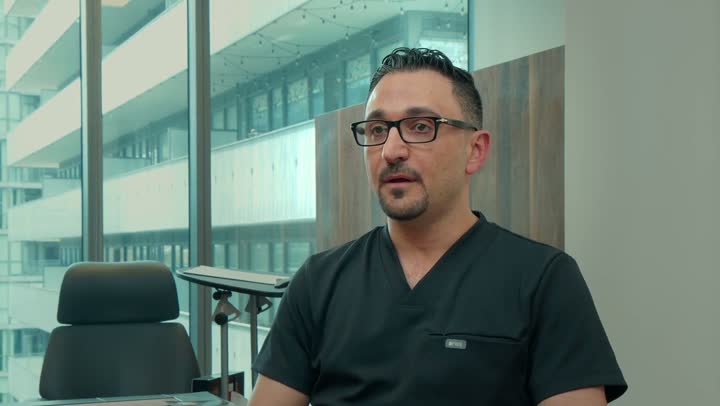
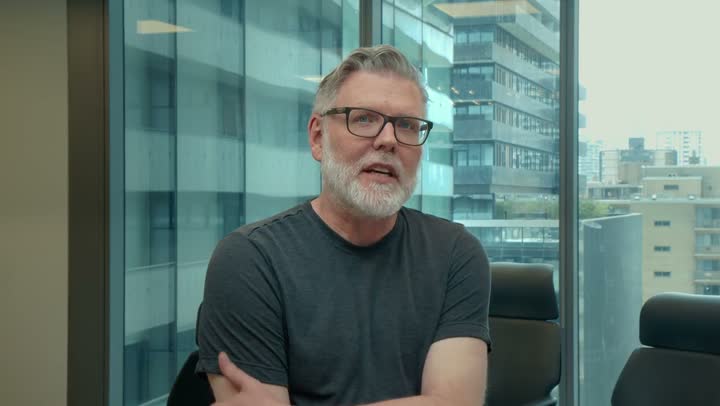
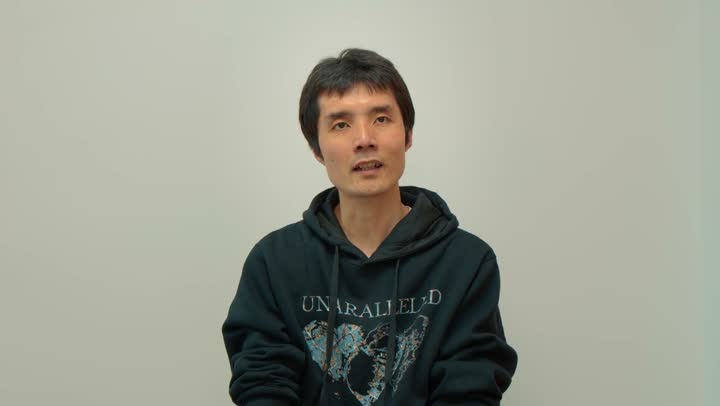
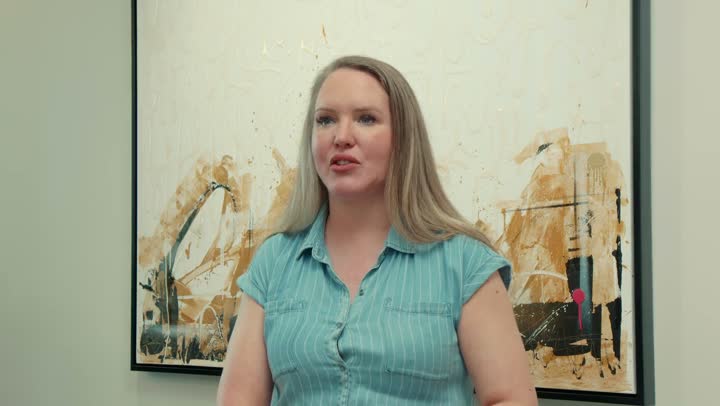
Licensed facilitator of The Leadership Game Written report in 48 hours 8 client videos below

What it is

A leadership diagnostic that looks like a game.

Your leadership team sits at a table to play a card-based game designed by the John Maxwell Team. The cards force real decisions. Naomi watches how your team actually makes them.

Step 1

Play

4 to 8 hours at your location. Cards, a die, real scenarios. Minimal individual prep. No rehearsed answers.

Step 2

Watch

Naomi sees who leads, who defers, who dominates and who withdraws. Participants complete pre and post-game surveys.

Step 3

Report

Within 48 hours you get it in writing: the patterns, the fracture points, and what to fix first.

4–8 hours
On your preferred premises
Diagnosis & Architecture
Written report within 48 hours

Leadership Diagnostic

Your location · Leadership team

  • How your team communicates, as observed
  • Where it is aligned and where it fractures
  • Who led, who deferred, who dominated, who withdrew
  • What to fix first, in order
  • Suggested next steps
Delivered within 48 hoursArchitected by Naomi Zee

Personality tests ask people about themselves. This observes them.

The report is what you are buying. The day is how it's obtained.

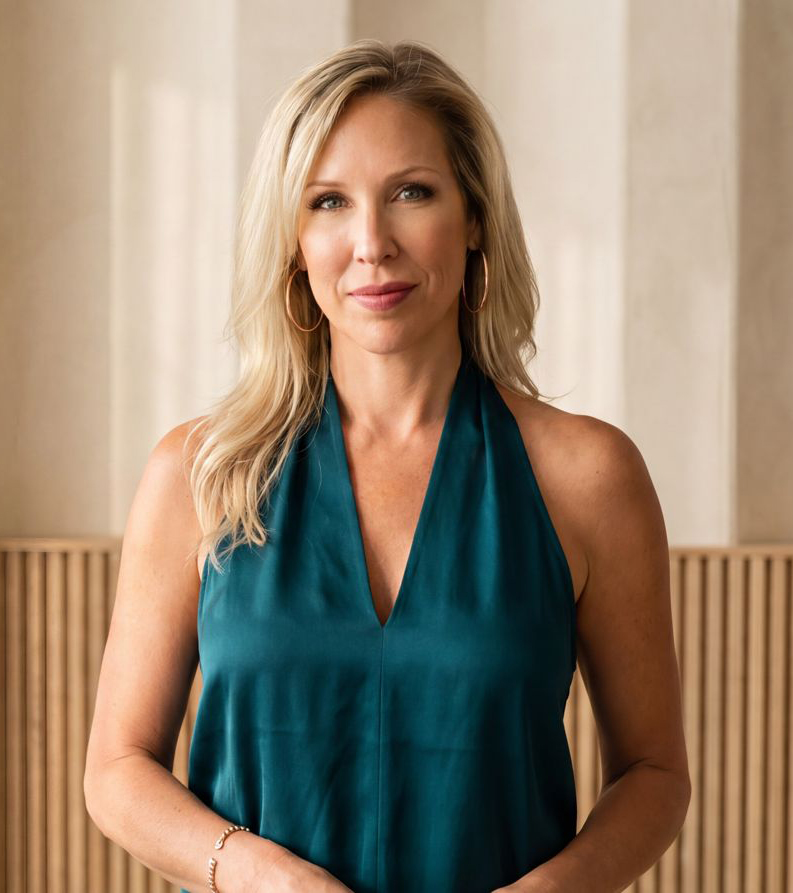
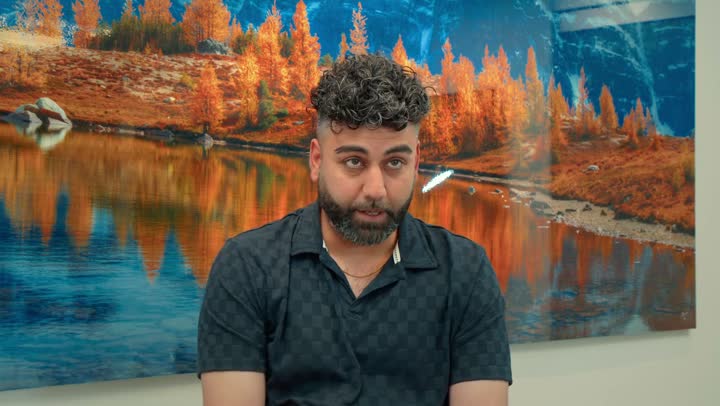
Naomi Zee Naomi Zee

Who facilitates it

Naomi Zee.

Executive coach and leadership trainer. She reads every intake herself, facilitates every session herself, and writes every report herself.

She is not there only to make the day enjoyable. She is there to see what your team does when nobody can rehearse, and to tell you plainly.

  • Trained and certified by the John Maxwell Team
  • Licensed facilitator of The Leadership Game
  • Based in Toronto. Works across North America, at your desired location.

Proof

What clients say.

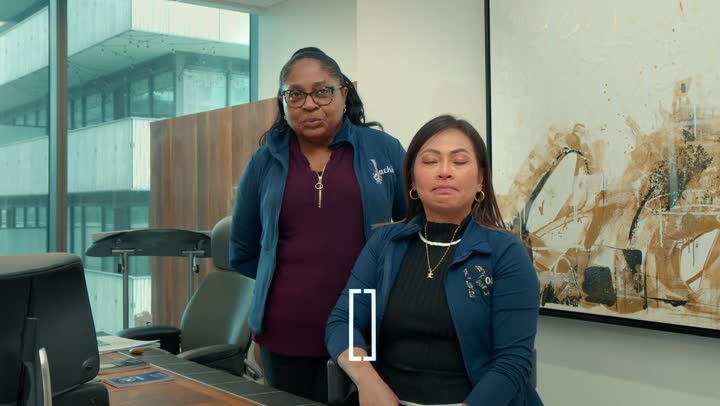
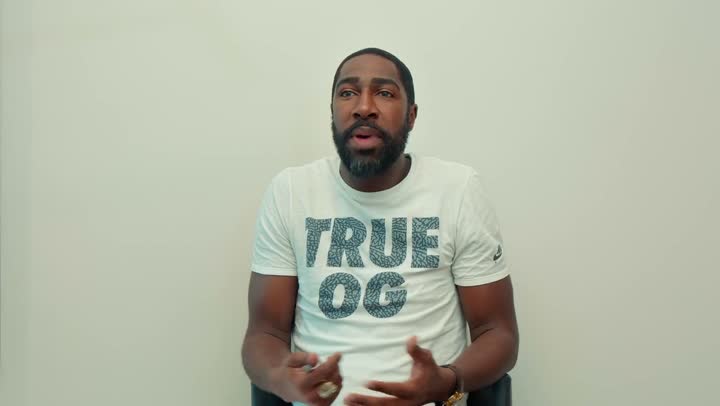
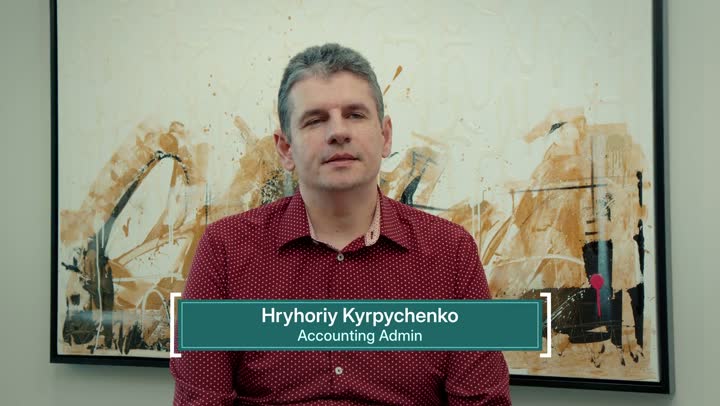
Tap any video. Sound on.

010:34
021:32
031:58
041:33
052:15
060:37
071:46
081:26

Swipe for more

Personal response. Written quote. No obligation.

Why the last training didn't stick

You've done a leadership day before. It didn't stick.

  • Front Office and Housekeeping still argue about room status every morning.
  • Your managers still work the longest weeks in the building.
  • The binder from the last training day is on a shelf.

Training works. The research is clear on when.

335 independent examples
δ = .82

Leadership training does change behaviour on the job, measured across 335 independent groups.

.82
0small .2medium .5large .8

Lacerenza and colleagues (2017), Journal of Applied Psychology. The effect depends on how the training is built and delivered.

Full quote and source

A meta-analysis of 335 independent samples found leadership training produces moderate-to-large gains, including δ = .82 for transfer of behaviour to the job.

Lacerenza, Reyes, Marlow, Joseph & Salas (2017), Journal of Applied Psychology 102(12), 1686–1718.

It works when the program has all six of these

  1. 01

    A needs analysis before the intervention

  2. 02

    Active practice, not lecture

  3. 03

    Multiple delivery methods

  4. 04

    Face-to-face, not self-administered

  5. 05

    Delivered on-site

  6. 06

    The intact team trained together — never as a standalone event

A room, a deck and a day. The Leadership Game does all six.

Cost to replace · Cornell
$12,000

to replace a front-desk associate, concierge or restaurant supervisor. For managers, Cornell wrote “even higher”, but never measured it.

Front-desk associate> $12,000
Concierge> $12,000
Restaurant supervisor> $12,000
Midlevel and upper-level managersNever measured

Tracey & Hinkin (2008), Cornell. 33 US properties, 2005 data. No Cornell study has priced the manager tier since.

Full quote and source

“Cornell's hotel school measured replacement costs in excess of $12,000 for positions such as front-desk associate, concierge, or restaurant supervisor — and wrote that for midlevel and upper-level managers the costs 'would be even higher.' They never measured how much higher.”

Tracey & Hinkin (2008), Cornell Hospitality Quarterly 49(1), 12–27.

Nobody has priced what it costs you to lose a manager. Which is why nobody manages it.

This is the first time anyone will show you, in writing, how the people who run your departments actually work together.

Is this for you?

Built for teams ready to be honest.

This is for you if

  • You run a hotel or resort with real department heads: Front Office, Housekeeping, F&B, Maintenance, Sales.
  • You want an honest read of your team, not a pat on the back.
  • Your leaders are good on their own and stuck as a group.
  • A leadership change, rebrand or sale is coming.

This is not for you if

  • You run one department.
  • You are not prepared to act on what the game reveals.
  • You want to be told everything is fine.
  • Your leaders won't sit down and play.

Questions HR/GMs ask before they book

How is this different from DISC or MBTI?
Those tests typically put people in a box and highlight their limitations. The Leadership Game shows how they work together, under pressure, in real time. Naomi observes, and interprets.
Does my team need to prepare?
Participants complete a mandatory questionnaire before and after the game.
Can it run virtually?
No. The Leadership Game must be experienced in person.
Is this team building?
Yes! However, The Leadership Game is not only fun team building, it is also designed to reveal how your team thinks, communicates, and makes decisions under pressure.
What happens afterwards?
Within 48 hours you get a written diagnostic report with specific observations, patterns and recommendations. Many teams follow up with training, coaching, or a second session six months later. Nothing is assumed.
How is it priced?
Every engagement is quoted individually, based on your leadership team size, number of properties and location. Your intake gives Naomi what she needs to quote in writing.
Where do the numbers on this page come from?

Every figure, with its source and its caveat. Nothing rounded, combined or restated. Where a number does not exist in published research, it says so.

  1. 51.7%“In 2023, total labour costs and related expenses made up 51.7% of the money US hotels spent to reach gross operating profit — and 32.4% of total revenue.”CBRE Hotels Research, New Labor Challenges Arise in 2023, published 4 June 2024. Sample: 2,456 US hotels.CBRE sells hotel advisory services. It stopped publishing this figure after 2023.
  2. $12,000“Cornell's hotel school measured replacement costs in excess of $12,000 for positions such as front-desk associate, concierge, or restaurant supervisor — and wrote that for midlevel and upper-level managers the costs 'would be even higher.' They never measured how much higher.”Tracey & Hinkin (2008), Cornell Hospitality Quarterly 49(1), 12–27.33 US properties, 2005 data. No Cornell study has priced the manager tier since.
  3. 21% → 28–29%“Hotel general manager turnover ran around 21% in 2019 and roughly 28–29% by mid-2023; assistant general managers moved from about 27% to about 33%.”Actabl and the AHLA Management Company Committee, Turning Down Turnover, October 2023.The only hotel-manager-specific turnover figure published. Actabl sells labour-management software; figures are read from charts with no data labels.
  4. 54% / 48%“When a hotel general manager changes jobs, only 54% stay in the hotel industry. For assistant general managers it is 48%.”AHLA Foundation / Lightcast, Hotel Industry Entry-Points and Pathways, March 2023.A measure of where job-changers go. It is not a turnover rate.
  5. 57 hours“Hotel managers worked an average of 57 hours a week against 36 for hourly staff, and reported a work stressor on 62% of days — against a US national benchmark of 25–44%.”O'Neill & Davis (2011), International Journal of Hospitality Management 30(2). 98 hotel managers and 66 hourly employees at 65 US full-service hotels.Data collected around 2006–2008.
  6. 84.4%“84.4% of responding hotel companies said that half or more of their managers began their hotel careers in an entry-level hourly line position. 99.5% said at least some of their general managers did.”American Hotel & Lodging Association and WageWatch, The Hotel Success Story: From Front Desk to C-Suite, January 2016.The unit is companies, not managers. Fielded in 2015, invitation-only sample, now a decade old.
  7. 23%“Nearly a quarter of US frontline supervisors — 23% — say they have never taken part in supervisor training.”Gallup, When Good Frontline Workers Make Bad Supervisors, January 2026. n = 1,214 US frontline supervisors.Across US frontline industries. Hotels are not broken out, and no hotel-specific version exists. Gallup sells manager-development consulting.
  8. Silos“…concentrate on the top line room revenue, a limitation that contributes to departmental silos where each uses different metrics to assess performance, leading to contradictory initiatives.”A Cornell Center for Hospitality Research roundtable of 23 hospitality academics and executives, Roundtable Recap, September 2021.A two-hour discussion, not a study. No hotels were sampled. The dollar cost of departmental siloing in hotels has never been measured in published research; figures online trace back to vendor marketing.
  9. +1% → +0.99%“Cornell researchers matched hotel reputation scores to STR revenue data across 11 markets and found that a 1% increase in a hotel's online reputation score was associated with a 0.99% increase in RevPAR.”Anderson & Lawrence (2014), Service Science.An association, not a cause. The reputation metric is a proprietary index (ReviewPro's Global Review Index).
  10. δ = .82A meta-analysis of 335 independent samples found leadership training produces moderate-to-large gains, including δ = .82 for transfer of behaviour to the job. The same analysis names what drives it: a needs analysis beforehand, active practice, multiple delivery methods, face-to-face rather than self-administered, delivered on-site, and the intact team trained together, never as a standalone event.Lacerenza, Reyes, Marlow, Joseph & Salas (2017), Journal of Applied Psychology 102(12), 1686–1718.The effect depends on how the training is built and delivered.
  11. d = 0.79A structured after-action review produces a large effect on outcomes — d = 0.79, meta-analysed across 61 studies, 107 effect sizes and 915 teams.Keiser & Arthur (2021), Journal of Applied Psychology 106(7), 1007–1032.A conditional finding. The effect depends on how the review is designed, not on the fact of holding a debrief.
  12. A voice“I did my 70, 80-hour weeks, staying to work until 11 o'clock at night… and it got to where I was completely burned out and actually gave my notice.”A hotel general manager, interviewed in Xiao & O'Neill (2010), Journal of Hospitality & Tourism Research 34(4).One of 49 US hotel GMs interviewed. A quote, not a statistic.

Book

Book your team's diagnostic.

Three fields to start. Naomi reads every one herself.

What happens after you book

Trained and certified by the John Maxwell Team · Licensed facilitator of The Leadership Game.

Intake Form · Step 1 of 2

Book my team's diagnostic

Three fields. Naomi replies personally with a written quote.

Please enter your full name.
Please enter a valid work email.
Please enter your property or company name.

No mailing list. Your details go to Naomi and nowhere else.